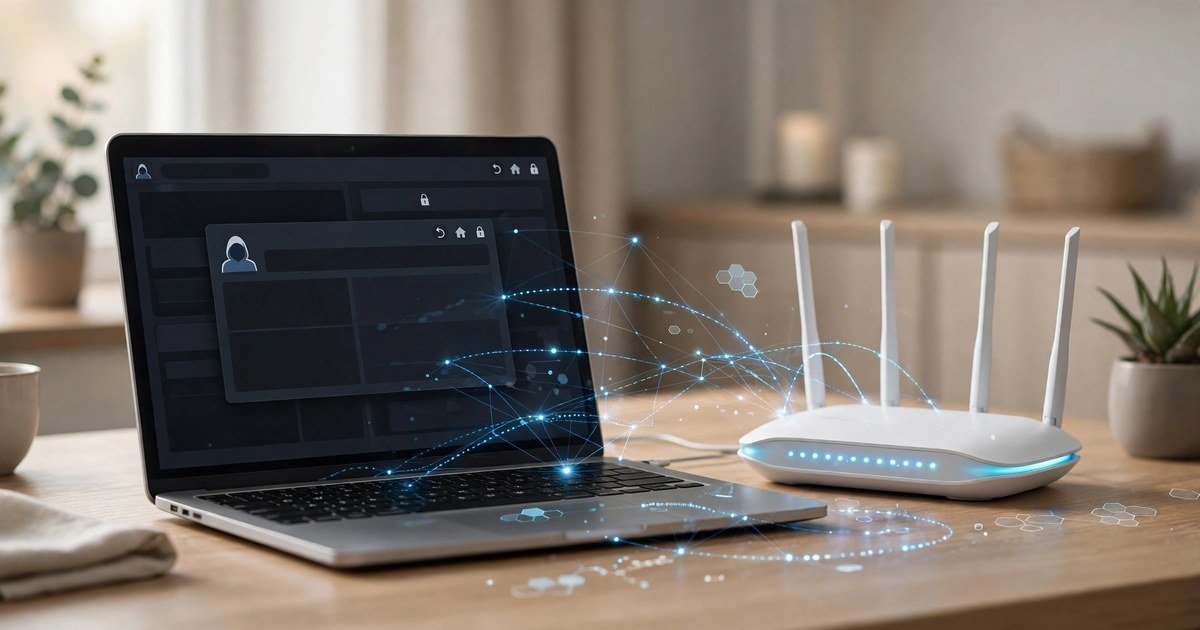

The internet and the World Wide Web are not the same thing. The internet is the network that connects computers around the world. The web is one of the services that runs on that network. Think of it this way: the internet is the road system, and the web is the shops and houses built beside those roads.
This article explains the difference in plain English. You will learn what each one is, how they work together, why people mix them up, and which one you actually use every day.
The Simple Answer
The internet is a global network of networks. It is made of cables, fibre, radio links, routers and shared rules called TCP/IP. These rules let billions of devices send small packets of data to each other, anywhere in the world, normally in well under a second.
The World Wide Web is an information space built on top of the internet. It is made of web pages and files linked together by addresses, called URLs, and fetched by a browser using a protocol called HTTP. On the internet you find computers. On the web you find documents, pictures, videos and pages.
Here is the test that settles it. Email, video calls, online games and file transfers all travel over the internet, but none of them is the web. The web is only the part you open in a browser, where pages have addresses and link to other pages. Every web page travels over the internet, but much of what travels over the internet is not the web.
| The Internet | The World Wide Web | |
|---|---|---|
| What it is | A global network of networks | An information space of linked pages and files |
| Built from | Cables, fibre, radio, routers and TCP/IP | Web addresses (URLs), HTTP and pages written in HTML |
| Began | ARPANET in 1969; TCP/IP across ARPANET from 1 January 1983 | Proposed in March 1989; public from 1991 |
| Created by | Many researchers, including Vint Cerf and Robert Kahn | Tim Berners-Lee at CERN, with Robert Cailliau |
| What it carries | All data: email, calls, games, files, web pages | Only web pages and files requested through a browser |
| Do you need it? | Yes, for anything online | Only when you browse websites |
The Internet: the Roads
The internet began as a research network. The first node of ARPANET, the network that grew into the internet, went live at UCLA in September 1969. Vint Cerf and Bob Kahn published a refined design for TCP in 1974, and ARPANET switched over to the TCP/IP protocols on 1 January 1983.
Packet switching sits at the heart of how the internet works. Messages are split into small addressed chunks, called packets, and each packet finds its own way across the network to its destination. The idea grew from work in the 1960s by Leonard Kleinrock, Paul Baran and Donald Davies in Britain.
What matters for everyday users is simple. Your broadband router, your phone mast and the undersea cables between continents are all part of the internet. When your WiFi drops, that is an internet problem, not a web problem. The web cannot reach you if the road is closed.
The internet has no single inventor and no single owner. It grew over decades from the work of many researchers, engineers and organisations. Nobody can switch the whole thing off, because it is a network of networks, and each network is run by someone different.
What else runs on the internet
The web gets most of the attention, but it is only one service among many. Email was moving across networks years before the web existed. Video calls, messaging apps, online games, cloud backups and smart home devices all use the internet without being part of the web.
This is why your connection can work fine for one thing and fail for another. A video call can run smoothly while a website refuses to load. The road is open, but one particular destination has a problem. If you want a plain explanation of how the network side works, read our guide to what web hosting is in simple terms, which explains where websites actually live.
The Web: the Destinations
The web arrived about twenty years after the internet. In March 1989, Tim Berners-Lee, a British scientist working at CERN, the European particle physics laboratory near Geneva, wrote a proposal titled “Information Management: A Proposal”. CERN staff typically stayed about two years, projects changed constantly, and information kept getting lost. His idea was a system of linked documents, called hypertext, that worked across all the different computers at CERN, over the internet that already connected them.
By late 1990, Berners-Lee and his colleague Robert Cailliau had built the first working version: a web browser, the first web server and the first web page, running on a NeXT computer at CERN. The first website went live in 1991, and in 1993 CERN made the underlying software available royalty free to the public. That free decision removed any licensing barrier, and anyone, anywhere, could build a web server or a browser.
The web rests on three simple ideas that Berners-Lee combined into one system. URLs give every document a standard address. HTTP is the simple request and response protocol a browser uses to fetch a document. HTML is the simple format for writing documents that can contain hyperlinks, clickable references to other documents. Together they made the web easy to use, and easy to build on.
How a web page reaches you
When you type an address into your browser and press Enter, your browser sends an HTTP request across the internet to the server that holds the page. The server sends the page back, also as data packets, and your browser turns the HTML into the page you see. Click a link, and the whole process runs again for the next page.
This is also why the web can break even when the internet works. If the server is down, the address is wrong, or the site has an expired security certificate, your browser shows an error. Your connection is fine. The destination is the problem. If you have ever seen a security warning in your browser, our guide on why a website says Not Secure in Chrome explains what it means and how to fix it.
Why People Mix Them Up
People mix the two up for a simple reason: they arrived together in most homes. When home internet became common in the 1990s, the web was the first thing most people used on it. The browser was the internet, as far as most users could tell. The habit stuck, and the two words became interchangeable in everyday speech.
Marketing made it worse. Internet providers sell “web access”, phones promise “internet” when they mean a browser, and news stories say “the internet” when they mean a website. Technically the words are wrong, but everyone understands what is meant, so nobody corrects them.
The mix-up is harmless most of the time. It only matters when you are fixing a problem or choosing a service. If someone says “the internet is down”, they usually mean their connection is down. If they say “the website is down”, they mean one web destination is broken. Knowing which layer has failed saves you from restarting the wrong thing.
A quick way to remember it
Use the roads and shops comparison. The internet is the road network. It moves traffic from any point to any other point, and it does not care what the vehicles carry. The web is one kind of business that uses the roads: a vast chain of shops whose shelves point you to other shops. Email is a postal service on the same roads. Video calls are phone calls on the same roads. The roads stay open even if one shop closes.
What This Means for You
Most of what you do online happens on the web, and you will keep calling it the internet, like everyone else. That is fine. The distinction matters in only a few practical situations.
First, when something breaks, work out which layer failed. If no app can reach the internet, check your router and your connection. If only one website fails, the problem is almost certainly with that site, not with you. Second, when you pay for a service, know what you are buying. A broadband package buys internet access. A hosting plan buys space for a website on the web. Third, when you think about privacy, remember that the web is only part of your online activity. Your browser history is not the whole story. A VPN encrypts traffic from your device across the internet, and our plain explanation of what a VPN actually does covers what it can and cannot hide.
FAQs
Is the internet the same as the World Wide Web?
No. The internet is the network of computers and cables that carries data. The World Wide Web is a system of linked pages and files that runs on top of the internet. Email, video calls and online games use the internet but are not part of the web.
Who invented the internet?
No single person invented the internet. It grew from the work of many researchers, starting with ARPANET in 1969 and the TCP/IP protocols that Vint Cerf and Robert Kahn helped design. The web, by contrast, was invented by one person: Tim Berners-Lee at CERN in 1989.
Can the web exist without the internet?
No. The web needs the internet to carry its pages between servers and browsers. Without the network underneath, a web page on one computer could never reach another computer. The internet, however, can work perfectly well without the web, as it did for its first twenty years.
Was the internet around before the web?
Yes, by about twenty years. The first ARPANET node went live in 1969, and the network switched to TCP/IP on 1 January 1983. Berners-Lee proposed the web in March 1989, and the first website went live in 1991.
What does WWW stand for?
WWW stands for World Wide Web. Berners-Lee chose the name to stress that the system has no centre and that anything can link to anything, which forms a web. He writes the name as three separate words with no hyphen.
Conclusion
The internet is the network. The web is one service that runs on it. The internet carries the data, and the web decides what to ask for and what comes back. Once you see the split, the two words stop being interchangeable, and fixing online problems gets easier, because you know whether the road is closed or just one shop is shut.