Is It Legal to Download YouTube Videos in the UK?
No, in most cases it is not legal. When you download a YouTube video, you make a copy of it. Under UK law, only the copyright owner has the right to make copies. There is no broad private copying exception in the UK, so “it is only for my own use” is not a defence. YouTube’s own rules point the same way. This article explains what the law says, what the courts have decided, and the legal ways to watch offline instead.
This article explains the law in general terms. It is not legal advice. If you need advice about a specific situation, speak to a solicitor.
The Short Answer
Downloading a YouTube video is usually unlawful in the UK unless you have permission. Permission can come from the copyright owner, from a licence on the video, or from a download feature that YouTube itself provides. Without one of those, a download is normally copyright infringement, even if you never share the file and never earn money from it.
Here is the quick version:
- Usually not legal: downloading music videos, films, TV clips or creator videos with a third party tool, app or converter site.
- Usually legal: downloading your own video from YouTube Studio, using YouTube Premium offline viewing in the app, or downloading a video the creator has released under a licence that allows it.
- Also legal: downloading a video that is in the public domain, or one where YouTube itself shows a download button.
The rest of this article explains why, and what to do instead.
What UK Copyright Law Actually Says
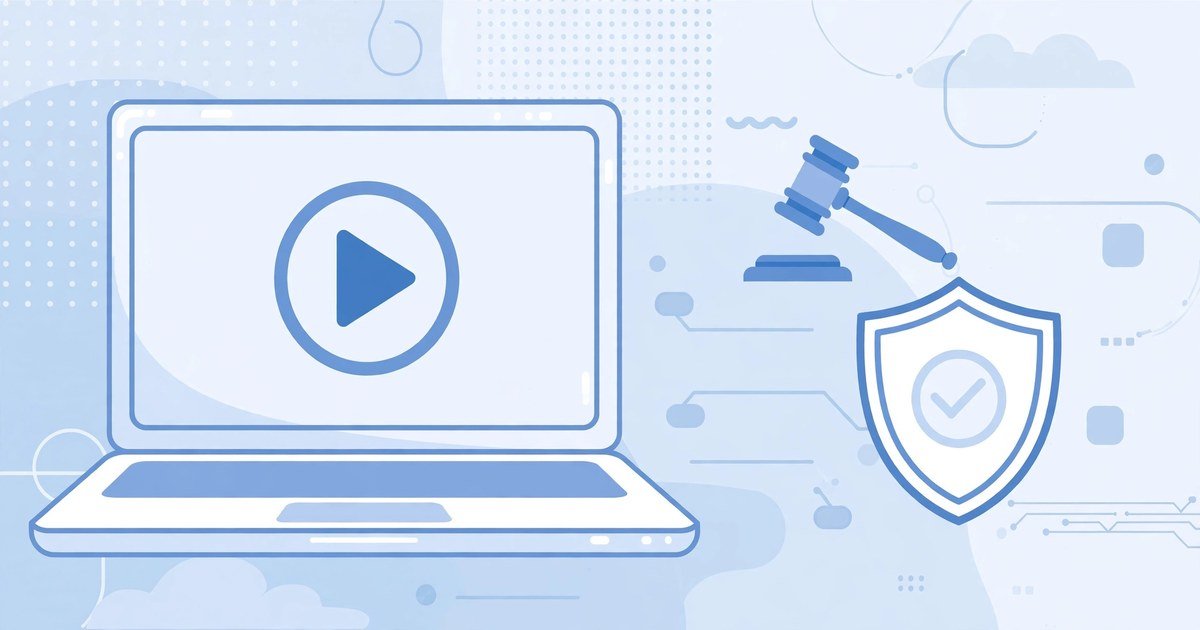
Copyright in the UK comes from the Copyright, Designs and Patents Act 1988, known as the CDPA. The Act gives the copyright owner the exclusive right to copy their work. A video on YouTube is a copyright work. The person who made it, or the company that owns the rights, controls whether copies can be made.
Downloading creates a copy. That is the key point. Streaming a video is not the same as downloading it. When you stream, you watch a temporary copy in your browser or app. When you download, you save a permanent file on your device. The law treats that saved file as a copy, and making it without permission infringes copyright unless a specific exception applies.
Many people assume personal use makes it fine. In the UK, it does not. A private copying exception was introduced in 2014, but it was quashed by the High Court in 2015, so it never took lasting effect. The UK has no broad rule that lets you copy copyrighted material just because it is for yourself.
There are narrow exceptions, known as fair dealing. They cover research and private study, criticism and review, and reporting current events. These exceptions are limited. They do not cover downloading a whole video to watch offline at your leisure. Quoting a short clip in a review is a different thing from saving the full video.
Copyright infringement is usually a civil matter. That means the rights holder can sue for damages rather than the police prosecuting you. Criminal offences exist for commercial scale infringement, such as selling pirated copies. The police advice service Ask the Police states plainly that copying films or programmes from the internet for your own use without permission is illegal under UK copyright law, and that penalties for copyright offences can include large fines or imprisonment.
In practice, rights holders focus their enforcement on the sites and tools that enable mass downloading, not on individual viewers. That does not make an individual download legal. It only means prosecution of one person for one video is rare.
The Stream-Ripping Court Rulings
Stream ripping is the name for turning a stream into a permanent file. A stream-ripping site or app takes a YouTube link and gives you back a video or audio file. The UK courts have dealt with these services directly.
In 2021, the High Court granted a blocking order to the British Phonographic Industry (BPI) and Phonographic Performance Ltd (PPL). The order required the main UK internet providers to block access to stream-ripping sites, including Flvto and 2Conv. The court found that the sites infringed record label copyrights. The case was brought under section 97A of the CDPA, which lets a court order an internet provider to block a service that infringes copyright.
The same pattern played out with YouTube-MP3.org, one of the best known converter sites. It closed in 2017 after record labels including Sony Music and Warner Bros sued it for copyright infringement. The site had argued that it only converted streams for personal use. The labels disagreed, and the site shut down rather than fight the case to the end.
These rulings matter for two reasons. First, they confirm that the UK courts treat stream ripping as infringement, not as a grey area. Second, they explain why converter sites keep disappearing or changing address. They operate in a space the courts have already ruled against.
What YouTube’s Own Rules Allow
Copyright law is only half the picture. YouTube has its own Terms of Service, and you agree to them by using the site. Those terms say you may only download content where YouTube displays a download button or similar link for it, or where you have prior written permission from YouTube and the relevant rights holders.
That means using a third party tool, browser extension or converter site to download a video almost always breaks YouTube’s rules, even if no copyright case ever follows. Breaking the terms can lead to account action, including warnings or suspension.
There are two official ways to save videos for offline viewing:
- YouTube Premium: Premium lets you download videos inside the YouTube app for offline viewing. These downloads are temporary, encrypted and tied to the app. You cannot move the file to another device or keep it if your subscription ends. You do not own the file.
- Creator-enabled downloads: some creators switch on a download option for their own videos. Where YouTube itself shows you a download button, using it is permitted.
YouTube Studio also lets creators download their own uploads. If you made the video and you own all the rights in it, downloading your own upload is fine.
Two warnings are worth adding. First, a VPN does not change the law. A VPN hides your traffic from your internet provider, but it does not give you permission to copy a video. If you want the full picture, read our guide on what a VPN actually does. Second, converter sites are often unsafe. Many are packed with fake download buttons, pop ups and adverts that install unwanted software. If a site asks you to install something or enter your email address, treat it with suspicion. Our guide on how to spot a phishing email covers the same tricks these sites use, and if you ever handed your email to a shady site, it is worth learning how to check if your email was in a data breach.
Legal Alternatives
You do not need to break the rules to watch offline. These options are all legal:
- YouTube Premium: the simplest option. Download videos inside the app and watch them without a connection. This is the only YouTube approved way to save most videos.
- Buy or rent the content: films and TV shows are available to buy or rent from Google TV, Apple TV and Amazon. The creator or studio gets paid, and you get a proper offline copy.
- Use a music streaming service: for songs, Spotify, Apple Music and YouTube Music all offer offline listening as part of a paid plan. This is the legal version of what a YouTube to MP3 converter promises.
- Download Creative Commons videos: some creators release their videos under a Creative Commons licence, usually CC BY. That licence gives you permission to download and reuse the video, as long as you follow its terms, such as crediting the creator. Check the licence on the video page before you download.
- Download public domain material: very old films and recordings whose copyright has expired can be downloaded freely. Archive.org is a good source for this kind of material.
- Download your own uploads: if you run a channel, YouTube Studio lets you download your own videos at any time. This is useful for keeping a backup of your work.
- Ask the creator: if a creator has not enabled downloads, you can ask them. Many small creators are happy to share a file or point you to a download link on their own website.
The pattern is simple. If the rights holder has given permission, downloading is fine. If they have not, it is not. When in doubt, assume you need permission and use one of the options above.
FAQs
Is it illegal to download YouTube videos for personal use in the UK?
In most cases, yes. The UK has no broad private copying exception. Downloading a copyrighted video without permission is infringement, even if you only watch it yourself and never share it.
Can I download a YouTube video if I never share it?
No, not sharing it does not make it legal. The infringement happens when you make the copy, not when you share it. Keeping the file to yourself avoids one problem, but it does not fix the copying problem.
Is using a YouTube to MP3 converter legal in the UK?
Almost always no. Converting a copyrighted song or video to MP3 makes a copy without permission. The UK courts have ordered internet providers to block stream-ripping sites, and YouTube’s terms also forbid it. The legal options are YouTube Music offline listening or a licensed download.
Can YouTube ban my account for downloading videos?
Yes. Downloading with third party tools breaks YouTube’s Terms of Service. YouTube can warn you, restrict your account or suspend it. Enforcement against individual downloaders is uncommon, but the power to act is in the terms you agreed to.
Is it legal to download my own YouTube videos?
Yes. If you uploaded the video and you own all the rights in it, you can download it from YouTube Studio at any time. This is the standard way creators keep backups of their own work.
What about Creative Commons videos?
Creative Commons videos are the clear exception. When a creator chooses a CC BY licence, they give permission for others to download and reuse the video, as long as the licence terms are followed. Always check the licence on the video page, and credit the creator as the licence requires.
Conclusion
Downloading YouTube videos in the UK is usually unlawful. UK copyright law gives the owner the exclusive right to make copies, there is no broad personal use exception, and the courts have ordered internet providers to block stream-ripping sites. YouTube’s own terms say the same thing in plainer language: download only where YouTube shows you a download button, or where the rights holder has given permission.
The good news is that the legal options are easy. YouTube Premium covers offline viewing, music services cover songs, and Creative Commons and public domain videos can be downloaded freely. If a video matters to you, use one of those routes. The creator gets paid or credited, and you get a file you can keep without worrying about the law.